
How to Get Your Car Out of Impound in California (2026 Guide)
Why Do Cars Get Impounded in California?
Getting your car impounded is stressful, confusing, and expensive — but it happens more often than you might think. In California, vehicles can be impounded for a wide range of reasons:
- DUI arrest — if you're arrested for driving under the influence, your vehicle will be towed and stored at an impound lot. Under California Vehicle Code (CVC) 14602.6, the vehicle can be held for up to 30 days.
- Expired registration — driving with registration that's been expired for more than six months can result in a tow under CVC 22651(o).
- No valid insurance — operating a vehicle without proof of financial responsibility is grounds for impound.
- Excessive unpaid parking tickets — five or more outstanding parking citations can lead to a boot or tow in many Inland Empire cities, including Ontario, Fontana, and Riverside.
- Accident scene clearance — if your vehicle is involved in a collision and is blocking traffic or is undrivable, law enforcement may order a tow.
- Stolen vehicle recovery — if your car was stolen and recovered by police, it will be towed to an impound lot until you can claim it.
- Street sweeping or parking violations — in some areas, repeated violations can result in a tow rather than just a ticket.
Understanding why your car was impounded is the first step toward getting it back, because the reason determines the process and timeline.
Documents You'll Need
Before heading to the impound yard, make sure you have the following documents ready. Showing up without them means wasted time and additional storage fees:
- Valid government-issued photo ID — California driver's license, state ID, or passport
- Current vehicle registration — the DMV registration card that matches the VIN of the impounded vehicle
- Proof of insurance — a valid auto insurance policy covering the vehicle
- Release authorization from law enforcement — if the vehicle was impounded due to a DUI, hit-and-run, or criminal investigation, you may need a release form from the arresting agency (local police department, CHP, or sheriff's office) before the impound lot will release it
- Lien holder authorization — if you're making payments on the car through a bank or finance company, some lots require proof that the lien holder authorizes the release
Pro tip: Call the impound lot before you go and ask exactly what documents they require. Requirements can vary slightly between facilities.
How to Find Where Your Car Is
If your car was towed and you don't know where it went, here's how to track it down:
- Check any paperwork left at the scene — if you were parked illegally and the car was towed, there may be a sign posted with the tow company's name and phone number.
- Call the local police non-emergency line — in Ontario, Fontana, Rancho Cucamonga, Riverside, or San Bernardino, the police department can tell you which tow company has your vehicle.
- Contact the California Highway Patrol (CHP) — if your vehicle was towed from a freeway (I-10, I-15, I-210, SR-60), CHP dispatched the tow and can provide the tow company's information.
- Check online — some cities and tow companies have online vehicle lookup tools where you can search by license plate number or VIN.
Act quickly. The sooner you locate your vehicle, the fewer daily storage fees you'll accumulate.
Impound Fees: What to Expect
Impound fees in California add up fast. Here's a typical cost breakdown for the Inland Empire area:
- Towing fee: $200–$350 depending on vehicle size, time of day, and distance. Larger vehicles (trucks, SUVs) cost more.
- Daily storage fee: $50–$75 per day. This starts accruing from the moment the vehicle arrives at the lot. Most lots charge for partial days as full days.
- Administrative or gate fee: $25–$75 — a one-time fee charged by some lots.
- After-hours release fee: If you pick up your vehicle outside of normal business hours, some lots charge an additional $50–$100.
Example scenario: Your sedan was towed on a Monday evening. You pick it up Wednesday afternoon. Your total bill might look like:
- Towing: $250
- Storage (2 full days + partial day = 3 days): $195
- Admin fee: $50
- Total: approximately $495
The longer you wait, the more expensive it gets. Every day you delay costs another $50–$75.
Time Limits — Don't Wait
This is critical: do not let your vehicle sit in impound. California law allows impound lots to initiate a lien sale on vehicles left unclaimed for an extended period:
- After 30 days, the storage facility can begin the lien sale process for vehicles valued under $4,000.
- For vehicles valued over $4,000, the timeline extends to approximately 60 days, but the process still moves forward.
- Once a lien sale is completed, the storage facility can sell your vehicle to recover unpaid fees — and you lose the car entirely.
Even if you're disputing the tow or waiting for insurance, communicate with the impound lot. Some facilities will work with you on timing if you stay in contact.
Your Rights Under California Law
California law provides vehicle owners with specific protections regarding towing and impound. Know your rights:
- CVC 22658 — governs private property towing. If your vehicle was towed from private property, the property owner or their agent must have posted visible signage authorizing towing. If proper signage wasn't posted, you may have grounds to contest the tow.
- CVC 14602.6 — covers 30-day impound holds for unlicensed drivers. If you're a registered owner but weren't the person driving, you have the right to request an early release hearing.
- Right to inspect before paying — you are entitled to inspect your vehicle for damage before paying the release fees. If the vehicle was damaged during towing or while in storage, document everything with photos before signing any paperwork.
- Itemized receipt — the tow company must provide you with a detailed, itemized receipt showing every charge.
- Posted rate schedule — the impound lot must display its fee schedule publicly. If the rates on your bill don't match the posted rates, challenge the discrepancy.
- Personal property access — you have the right to retrieve personal belongings from your impounded vehicle during business hours without paying the full release fee.
What If You Can't Afford the Fees?
Impound fees can be a serious financial burden, especially when they accumulate over several days. Here are options to explore:
- Payment plans — some impound facilities in the Inland Empire offer payment plans, especially for larger bills. Ask directly — the worst they can say is no.
- Hardship waiver or reduction — in some jurisdictions, you can request a fee reduction based on financial hardship. This is more common with government-contracted tow yards.
- Contest a wrongful tow — if you believe the tow was illegal or improper (no posted signage on private property, improper police procedure, etc.), you can request a tow hearing. In many California cities, you can request this hearing within 10 days of the tow. If you win, the towing and storage fees may be waived entirely.
- Contact legal aid — if fees are substantial and you believe the tow was unlawful, organizations like the Legal Aid Society of San Bernardino or Inland Counties Legal Services may be able to help.
- Insurance coverage — check your auto insurance policy. Some comprehensive coverage plans include towing and storage reimbursement, which can offset impound costs.
Need a Tow After Release?
Once you've paid your fees and retrieved your vehicle, you may find that the car isn't in drivable condition — especially if it was impounded after an accident or mechanical breakdown. If your vehicle won't start or isn't safe to drive, you'll need a tow from the impound lot to your mechanic, dealership, or home.
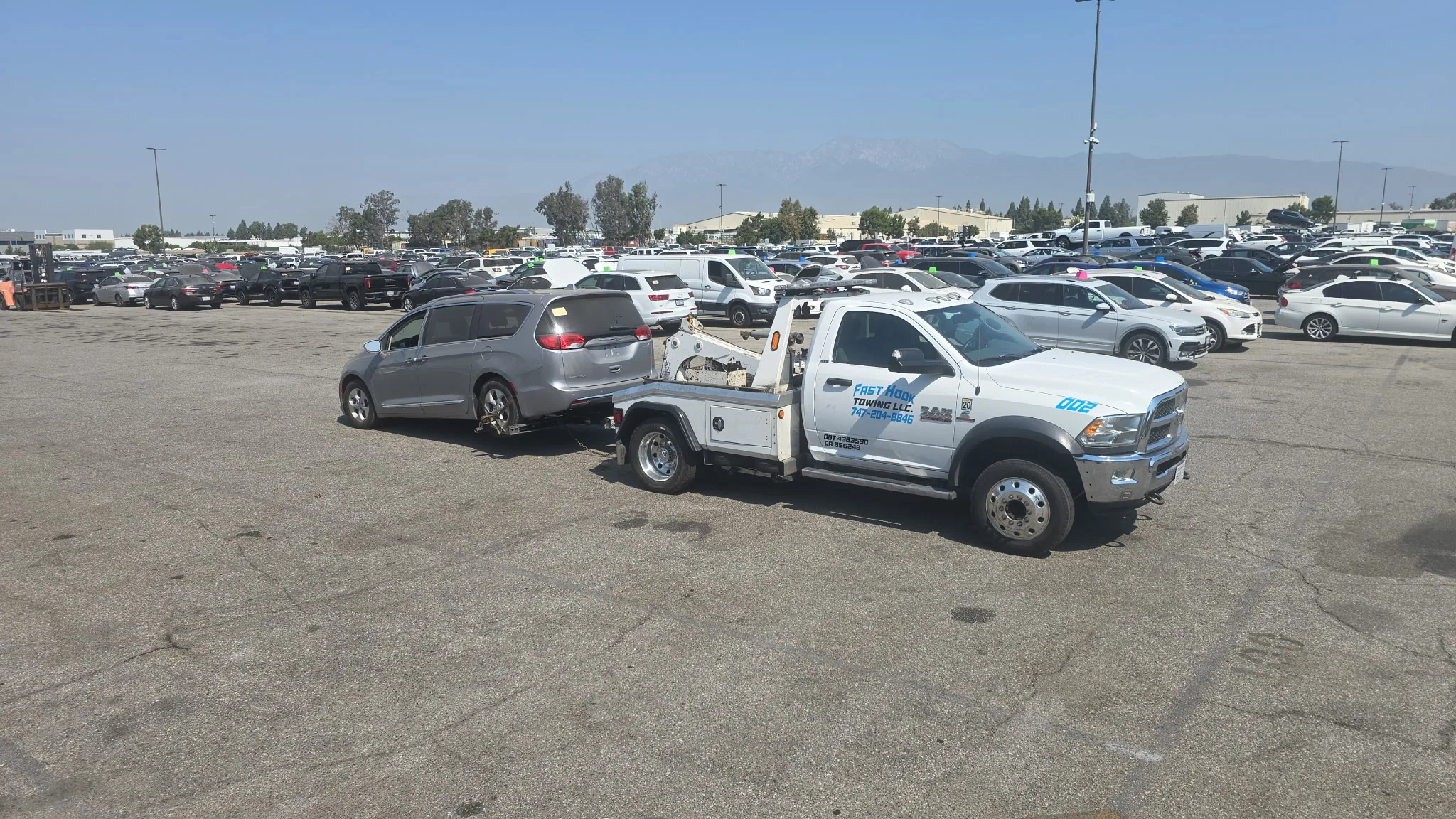
Fast Hook Towing LLC provides emergency towing and flatbed towing service across the entire Inland Empire. We can meet you at the impound lot and transport your vehicle wherever it needs to go — safely and at an upfront, honest price.
Call 747-204-8846 any time, 24/7. We're here to help you get back on the road.